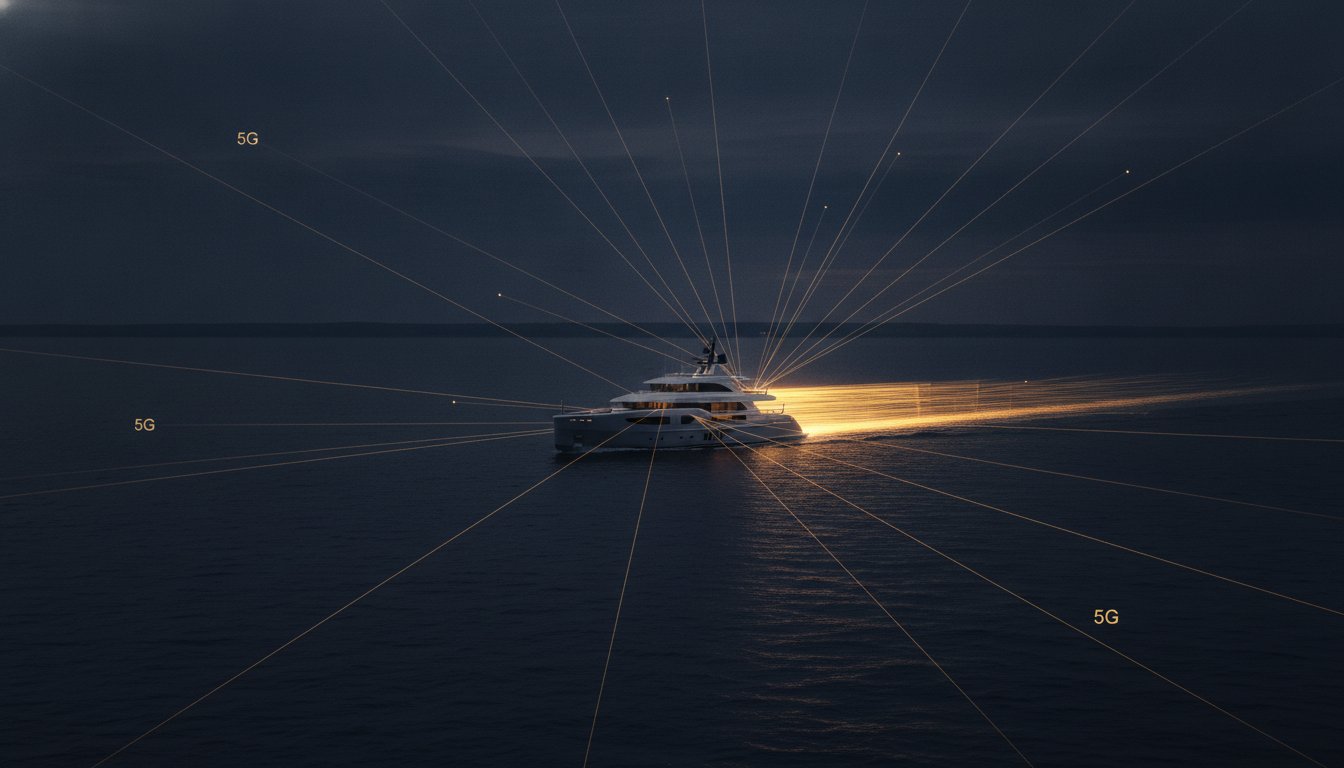
Maritime connectivity is not about the individual "pipe"; it is about the intelligent orchestration of every available link into a single, resilient tunnel. You likely know the frustration of a high-stakes video call dropping the moment your vessel clears the harbour wall or transitions from 5G to Starlink. Deploying Peplink for superyachts requires a shift from simply buying hardware to engineering a system that treats every connection as a part of a unified, logical path.
I have spent more than 15 years architecting Peplink SD-WAN solutions designed to maintain stable connections in challenging offshore conditions. In my experience, the key to reliability lies in how we manage the handover between satellite and cellular links. I will share my approach to configuring SpeedFusion to aggregate these disparate sources, ensuring your crew has centralised visibility of the entire network whilst automating failover to reduce the risk of downtime. We will look at the technical processes involved in managing multiple international SIMs and reducing the latency issues that often plague satellite-only periods.
Key Takeaways
- Learn why single-provider systems often fail during critical transitions and how to mitigate the risk of dropouts during link handovers.
- Understand how to architect Peplink for superyachts using SpeedFusion to aggregate satellite and cellular links into a single, resilient logical tunnel.
- Discover the technical criteria for selecting high-throughput maritime hardware capable of managing multiple 5G modems in offshore conditions.
- Gain insights into maintaining centralised visibility of your vessel network using InControl2 for real-time monitoring and GPS tracking whilst at sea.
- Recognise why the initial design and RF profiling phase is more critical to long-term stability than the hardware purchase itself.
The Connectivity Challenge: Why Single-Link Systems Fail at Sea
I have spent years boarding vessels where the primary complaint is a total loss of connectivity during the most critical moments of a charter. Often, these yachts rely on a single, expensive satellite provider or a local cellular link, assuming that high bandwidth equates to high reliability. This is rarely the case. In my experience, a single-link system is a liability. When that connection falters due to atmospheric conditions or cell tower congestion, the entire onboard network goes dark. It's a common oversight that leads to frustration for both the crew and the guests who expect shore-like performance regardless of their coordinates.
The transition between shore Wi-Fi, 5G, and satellite is the most common point of failure I encounter. As the vessel clears the harbour wall, the handover process begins. Without a correctly engineered solution, this transition is clumsy. Standard failover usually results in dropped sessions, which is unacceptable for a superyacht guest expectation. When we design Peplink for superyachts, we prioritise the orchestration of these links to ensure the transition is near-seamless. We don't just want a backup; we want a unified tunnel that stays open regardless of which physical link is active. My goal is to move away from the "all or nothing" approach and instead build a network that adapts to the available environment.
The Problem With Simple Failover
Traditional failover mechanisms are fundamentally reactive. They wait for a primary link to reach a state of total failure before attempting to route traffic through a secondary source. I prefer to describe this as a "break-before-make" approach; it is reactive rather than proactive. For mission-critical applications like VoIP, video conferencing, or high-definition streaming, this delay is a significant disruption. In a professional maritime setting, we can't wait for a failure to occur before we act. We need a system that monitors link health in real-time and shifts traffic before the user experiences a dropout.
Environmental Constraints of Maritime Vessels
The physical reality of a vessel at sea is a hostile environment for radio frequencies. Saltwater, mast height, and hull construction all interfere with signal propagation in ways that terrestrial engineers rarely have to consider. I often find that poor antenna placement is the root cause of "hardware failure" complaints. If your antennas are shadowed by the radar arch or placed too close to competing RF sources, even the best router will struggle. Multi-WAN design must account for these physical obstructions from the start to ensure the 5G and satellite modems can actually see the networks they're trying to reach. We must consider the vessel's specific RF profile before a single piece of hardware is bolted down.
Architecting Resilience with Peplink for Maritime Vessels
Resilience at sea is not achieved by simply adding more hardware; it is achieved through the intelligent aggregation of every available resource. SpeedFusion is the core technology we use to aggregate multiple connections into one logical tunnel. By creating this tunnel, we can bond Starlink, 5G, and 4G links to mitigate the weaknesses of any single provider. This approach is fundamental when designing Peplink for superyachts. It ensures that the network is not dependent on a single "pipe" that might be compromised by weather, distance from the shore, or physical obstructions on the vessel itself.
In my experience, a well-configured tunnel significantly reduces the risk of packet loss during satellite obstructions. On a yacht, the mast or superstructure can easily block a satellite's line of sight as the vessel turns. Without bonding, this results in an immediate session drop. With SpeedFusion, the router detects the degradation and shifts the traffic across the cellular links before the user experience is affected. We also use this architecture to provide a stable IP address regardless of which physical link is active. This is vital for secure corporate VPNs or remote monitoring systems that would otherwise require a fresh login every time the WAN source changes.
SpeedFusion Bonding vs. Load Balancing
There is often confusion between load balancing and bonding, yet the distinction is critical for maritime reliability. Load balancing merely spreads different traffic sessions across various links; if one link fails, the sessions on that link fail with it. Bonding is different. I recommend bonding for any application where session persistence is vital, such as video conferencing or VOIP. SpeedFusion is a technology that creates a single logical connection from multiple physical WANs. This means a single file transfer or video call can utilise the combined bandwidth of all active links simultaneously.
Integrating Starlink into the SD-WAN Fabric
Starlink has changed the expectations for maritime bandwidth, but it should be treated as just another WAN input rather than a total solution. We configure Peplink routers to use Starlink as the primary high-bandwidth pipe whilst cellular provides the low-latency "anchor." This hybrid approach ensures that if a satellite is blocked by the mast, the cellular link carries the load without a total disconnection. If you are planning a new build or a refit, our team can assist with SpeedFusion configuration to ensure these links are correctly prioritised.
This architecture allows the ETO to set granular rules. For example, we can route guest streaming traffic over the high-capacity Starlink link whilst pinning critical bridge systems to a bonded cellular and satellite tunnel. It's about creating a hierarchy of traffic that matches the vessel's operational needs. By treating all connections as a single fabric, we move away from reactive failover and towards a proactive, engineered network that maintains stability in the most challenging offshore conditions.

Hardware Selection: Engineering for the Marine Environment
Selecting hardware for a superyacht requires a different mindset than for a small sailboat or a typical coastal cruiser. On a 15-metre vessel, a single 5G modem might suffice; on a 60-metre superyacht with a dozen guests and a full crew, the requirements are exponentially higher. I look for high-throughput devices that can handle multiple 5G modems simultaneously. This density is the baseline for any serious maritime deployment. When specifying Peplink for superyachts, the focus should always be on the number of WAN inputs and the encrypted throughput capacity rather than just the raw download speeds quoted on a spec sheet. Reliability at sea depends as much on the physical housing and power supply as it does on the software. A router that overheats in a poorly ventilated rack or fails during a minor power surge is of no use when you are mid-Atlantic.
The engineering challenge lies in the processing power required to maintain a bonded tunnel. Every packet sent through a SpeedFusion tunnel must be encrypted, encapsulated, and managed across multiple WAN links. This takes significant CPU resources. If the router’s processor is undersized, it becomes a bottleneck, regardless of how much bandwidth Starlink or 5G providers are delivering. We must ensure the router can handle the vessel’s maximum expected speed whilst maintaining the integrity of the SD-WAN fabric. In my experience, under-speccing the core router is one of the most common causes of perceived network instability.
Multi-Modem Routers and Throughput
For superyachts, I typically specify routers with at least four cellular modems, often referred to as the HD4 category. This provides the redundancy needed for international cruising across different carrier bands; you can have SIMs from multiple providers active at once. This is essential for maintaining a connection as you cross borders, such as moving from French to Italian waters. We must ensure the router processor can handle the SpeedFusion encryption at the vessel’s maximum speed, allowing for a near-seamless experience for the users onboard.
Antenna Placement and Cable Engineering
Signal loss is the silent killer of maritime connectivity. Long cable runs between the mast and the server rack lead to significant signal degradation, especially at the higher frequencies used by 5G. I often recommend using dome-based systems to keep the modems as close to the antennas as possible; this minimises the length of the RF cable and preserves signal quality. If the project requires traditional antennas, LMR400 or an equivalent low-loss cabling is a non-negotiable requirement. Even a few extra metres of the wrong cable can be the difference between a stable 5G connection and a total loss of signal. When we design Peplink for superyachts, we treat the antenna system and the cabling as a single, integrated component of the network architecture.
Visibility and Management: Keeping the ETO in Control
A network is only as good as your ability to monitor it whilst mid-Atlantic. In my experience, a deployment without granular visibility is a liability. When we architect Peplink for superyachts, we treat management as a core engineering requirement rather than an afterthought. If the Electro-Technical Officer (ETO) cannot see real-time link performance, they cannot troubleshoot effectively during a high-stakes guest trip. A "black box" approach to connectivity leads to reactive fixes; we prefer a proactive stance where the network health is always transparent.
Managed services allow us to proactively adjust configurations before the guests notice a problem. We monitor the SD-WAN fabric from our operations centre. We often spot a degrading satellite connection or a congested cell tower before the bridge even reports a slowdown. This level of oversight is vital for maintaining the high standards expected in the maritime sector. If you require a more robust way to oversee your vessel's connectivity, you can explore our managed services and custom software options. This proactive approach is what separates a standard hardware install from a resilient maritime network.
The Role of InControl2 in Maritime Operations
Peplink InControl2 provides the baseline for centralised management and GPS tracking. It allows for remote firmware updates and configuration changes without being on the vessel. I use it to monitor signal strength and data usage across multiple international SIMs. This centralised view is essential for yachts moving between different geographic regions. It provides a historical record of link performance, which is invaluable when identifying dead zones or recurring provider issues along specific cruising routes.
Custom Software and Bespoke Portals
Standard dashboards can be overwhelming for non-technical crew members who simply need to know if the system is healthy. Our team often develops custom software portals to simplify complex data for the crew. We design bespoke interfaces that show the status of the connection in plain English. This level of visibility ensures the ETO can quickly identify if a specific SIM or satellite link is underperforming. By translating technical metrics into actionable insights, we empower the crew to manage the network without needing a deep background in SD-WAN engineering.
Scoping Your Deployment: The Technical Factory Approach
Every superyacht has a unique RF profile. No two vessels are identical in their construction, their superstructure layout, or their operational requirements. Because of this, I believe the design phase is more important than the hardware purchase itself. You can buy the most expensive router in the catalogue, but if the configuration isn't tailored to your specific hull and cruising patterns, it's just an expensive paperweight. Precision matters. We don't guess; we measure. Whilst hardware is a vital component, it's the engineered design that provides the result. We start by auditing the existing infrastructure and identifying the "dead zones" on board. This involves:
- RF profiling of the vessel's superstructure to identify signal shadows and interference.
- Evaluating existing cable runs to minimise attenuation and signal loss.
- Assessing guest and crew bandwidth requirements for peak-load scenarios.
Our goal is to deliver a network that the crew can trust implicitly. When the owner is hosting a high-profile meeting, the ETO shouldn't be sweating over the WAN status. We focus on the engineering details that others often overlook, such as power redundancy, thermal management in the AV racks, and the physical security of the SIM slots. When we deploy Peplink for superyachts, we're building a mission-critical system designed for longevity and resilience in the most demanding maritime environments.
Network Design and Consultancy
We don't just sell boxes. We engineer the entire SD-WAN environment. I personally oversee the SpeedFusion configuration to ensure it meets our resilience standards. This isn't a "set and forget" process. Our consultancy ensures that the hardware is matched to the vessel’s cruising grounds. A yacht spending its season in the Mediterranean has different cellular requirements than one exploring the remote reaches of the Pacific. We optimise the modem bands and the SpeedFusion settings to match the specific providers available in your region, ensuring the network remains stable as you cross international borders.
Technical Training for On-Board Staff
The best network in the world is useless if the people running it are in the dark. We provide specialised technical training for ETOs and engineers as part of our deployment process. It's vital that the on-board team understands how to perform basic troubleshooting and how to interpret the data coming from the management interface. This builds in-house competence and reduces the reliance on external support for minor issues. When the crew knows how to manage the Peplink for superyachts installation, they can resolve local problems before they escalate into guest complaints. It's about resilience, not just speed.
If you are looking to improve your vessel's network stability, I invite you to have a brief scoping conversation regarding your connectivity needs. We can discuss how an engineered approach to Peplink can benefit your next season.
Securing the Future of Your Vessel's Connectivity
Resilient maritime networking is not achieved by accident; it is the result of meticulous engineering and a deep understanding of the maritime RF environment. By moving beyond simple failover and adopting SpeedFusion bonding, you can maintain stable connections for guests and crew even whilst offshore. A successful deployment of Peplink for superyachts relies on treating every WAN source as part of a unified, logical fabric managed through a centralised interface. This approach reduces the risk of dropouts and ensures the ETO remains in control of the vessel's data flow at all times.
As a Peplink Certified Engineer Trainer with more than 15 years of experience, I have seen how an engineered approach transforms onboard operations. Our team at The Tech Factory works with Peplink and with Peplink’s largest global distributor, specialising in mission-critical SD-WAN deployments where failure is not an option. We focus on the design and management processes that ensure long-term stability in challenging conditions. We don't just provide hardware; we provide the technical mastery required to keep a vessel connected regardless of its coordinates.
If you are ready to move away from reactive connectivity fixes, I invite you to book a scoping conversation for your maritime connectivity needs. We can discuss how to optimise your vessel's network for the seasons ahead.
Frequently Asked Questions
Can Peplink really bond Starlink with 5G for superyachts?
Yes, Peplink's SpeedFusion technology is specifically designed to bond disparate WAN sources like Starlink and 5G. By creating a single logical connection, we can utilise the high bandwidth of satellite whilst using the low latency of cellular as an anchor. This is a standard configuration when we architect Peplink for superyachts, as it mitigates the impact of satellite obstructions caused by the vessel's mast or superstructure during turns.
What is the best Peplink router for a maritime vessel?
The most suitable router depends entirely on your vessel's throughput requirements and guest count. For flagship deployments, I typically specify the Peplink Dome Pro LR or the MAX HD4 MBX 5G. These units provide the high-density modem support and processing power required to handle encrypted SpeedFusion tunnels at high speeds. Smaller vessels might find the MAX BR1 Pro 5G sufficient, but superyachts usually require the multi-modem redundancy found in higher-tier models.
How does SpeedFusion handle international roaming for yachts?
SpeedFusion provides session persistence by maintaining a constant IP address through a FusionHub or Balance router at a shore-side data centre. As your vessel crosses international borders and SIM cards switch providers, the logical tunnel remains open. This prevents your VPNs, VoIP calls, or streaming sessions from dropping during the handover. It is a proactive way to manage the complexities of international roaming without manual intervention from the crew.
Do I need a special antenna for 5G connectivity at sea?
I always recommend maritime-grade antennas for any offshore deployment. Standard 5G antennas are not built to withstand the corrosive effects of saltwater or the physical vibrations of a vessel. We specify antennas like the Peplink Maritime 40G, which are engineered for high gain and 5G frequency support. Correct antenna selection is as critical as the router itself for maintaining a stable signal when the vessel is far from the coast.
What is the maximum range for cellular connectivity offshore?
Cellular range offshore is typically limited to approximately 20 to 30 miles, though this varies based on tower height and atmospheric conditions. With high-gain maritime antennas and sensitive modems, we can often maintain a usable 5G or LTE signal further than standard consumer devices. However, once you move beyond the horizon, the system will naturally transition to satellite as the primary link within the SpeedFusion fabric to maintain connectivity.
Can I manage my yacht network remotely using InControl2?
Remote management is a core feature of the Peplink ecosystem via the InControl2 platform. It allows me or your on-board ETO to monitor signal health, track data usage, and push configuration changes from any location with internet access. This centralised visibility is essential for troubleshooting issues whilst the vessel is mid-charter. We can even perform remote firmware updates to ensure the network remains secure and efficient without being physically on board the vessel.
How does Peplink reduce the risk of connection dropouts?
Peplink reduces the risk of dropouts by monitoring the health of every active link in real-time. Using SpeedFusion Hot Failover, the system can move traffic from a degrading link to a healthy one in a near-seamless manner. Unlike standard routers that wait for a total failure, Peplink is proactive. This is why Peplink for superyachts is considered the gold standard for maintaining stable video calls and secure corporate connections whilst at sea.
Is it possible to prioritise specific traffic, like the Captain’s bridge, over guest Wi-Fi?
You can absolutely prioritise critical traffic using Peplink’s granular Outbound Policy and Quality of Service rules. We often configure the network to ensure the Captain’s bridge and essential navigation systems have guaranteed bandwidth. Guest Wi-Fi can be relegated to a lower priority or capped to prevent a single user from consuming all available satellite capacity. This ensures that operational systems always remain functional regardless of guest activity or high bandwidth demands.